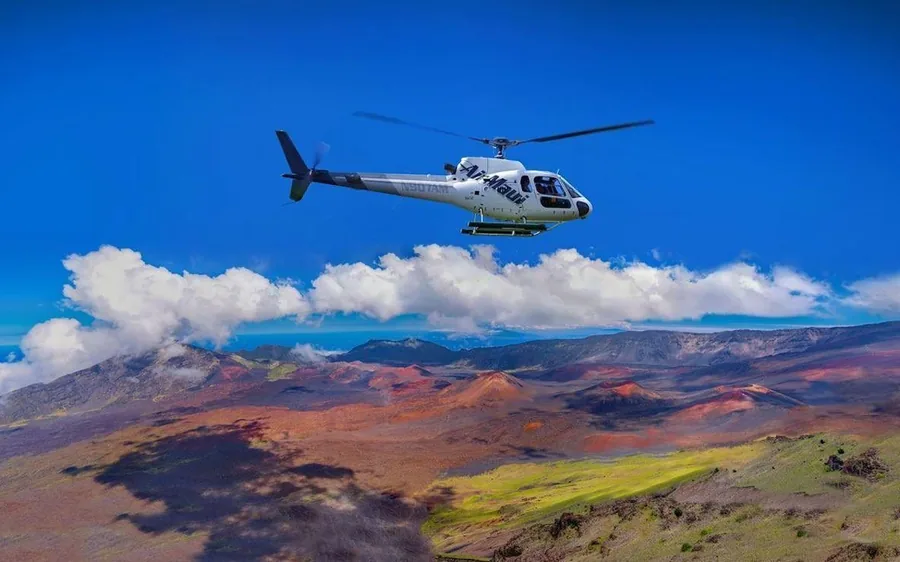
Cheapest flightRated 5.0
45 minHana Rainforest and Haleakala Crater 45-min Helicopter Tour
★ 5 · 21 reviews
- Cheapest flight here
- Forty-five minutes, rainforest and crater
- 21 reviews at 5.0
- Free cancellation
$396$8.80 / min
Check availability→ Haleakala
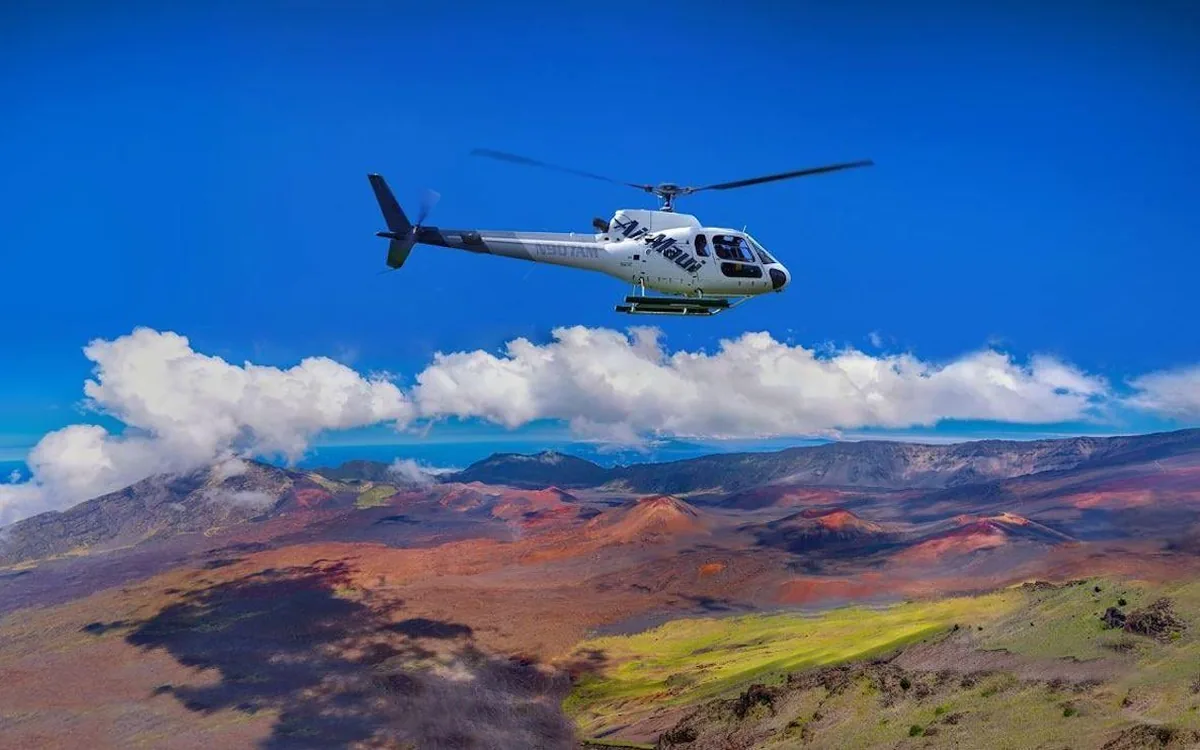
Haleakala is 10,023 feet high and the basin at the top is not what most people picture. It is not a blown caldera; it is an erosional bowl, cut by two large valleys that met at the summit and were afterwards partly refilled by cinder cones. Seen from a helicopter tour Maui operators fly, that is immediately obvious, and it is the single most interesting thing about the mountain.
Quick answer
Two listings put the Haleakala crater at the centre of the route: the forty-five-minute flight at $396, which climbs to the summit before dropping down the windward flank, and the longer listings that include it on the way past. The crater is a 10,023-foot erosional basin with cinder cones on its floor, and from the air the cones read as a row of red and black mounds. It is also the coldest part of the flight, and the clearest.
What the crater actually is
Not a collapsed chamber. The head of two valleys.
A caldera forms when the roof of a magma chamber collapses. Haleakala’s summit basin did not form that way. Two enormous stream valleys — Keanae on the north, Kaupo on the south — cut back into the mountain until their heads met at the top, leaving a single connected depression seven miles long. Later eruptions built cinder cones on the floor of it and sent lava out through the two valley gaps.
From the ground, on the rim at sunrise, it looks like a crater and everyone calls it one. From a helicopter you see the two gaps in the wall, and the shape stops being a bowl and becomes what it is: the head of two valleys, filled in.
That is the argument for seeing it from the air rather than only from the rim. The road to the summit is excellent and the sunrise is famous, but neither shows you the structure of the thing.
Book direct
The flight built around it, the one that lands on the windward side, the ninety-minute circuit and the rainforest-only alternative.
★ 5 · 21 reviews

★ 4.9 · 332 reviews
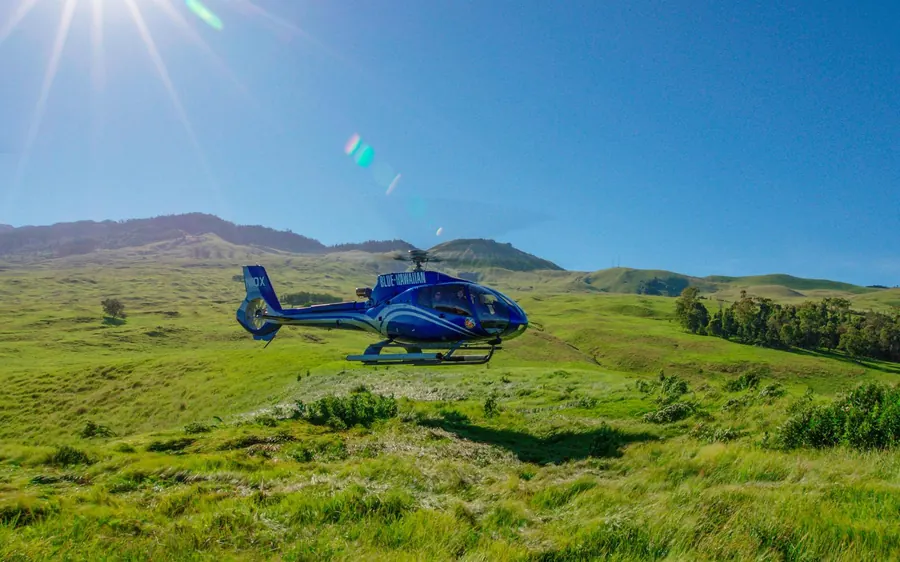
★ 5 · 7 reviews
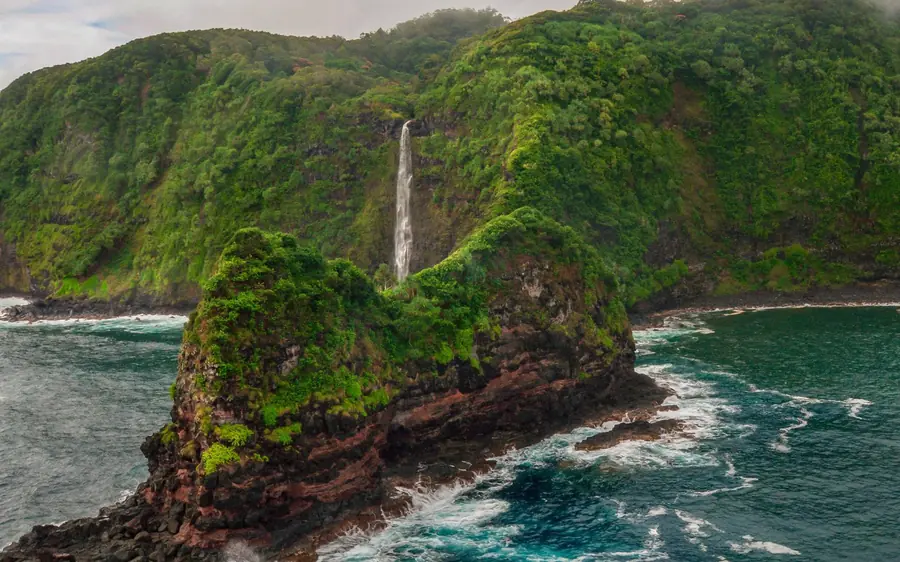
★ 4 · 1 review
The crater against the rim
The rim gives you the light. The air gives you the shape.
From the rim. The sunrise is genuinely one of the sights of the Pacific, it costs the price of a park entry and a very early alarm, and it gives you the crater at the one hour when the cones have shadows. It also requires a reservation for sunrise entry, and it is cold enough at 10,000 feet to need a coat in July.
From the air. You see the structure, the gaps, the scale and the relationship between the summit and the rainforest below it — and then the aircraft goes down the windward flank and shows you the waterfalls, which the rim does not.
They are not substitutes. If the mountain is the reason you came to Maui, the rim at dawn and a helicopter tour Maui operators fly later the same week is the complete version.
What the crater flights do not give you
Worth knowing before you book for the mountain specifically.
Nothing lands up there. The only landings on this page are the Wailua Valley and Ulupalakua Ranch.
These are daytime flights. The famous light belongs to the rim.
On a forty-five-minute flight the crater is minutes, not a circuit-and-a-half.
It is usually above the cloud, which is the good news, but not always.
Common questions
Yes — the forty-five-minute flight at $396 is built around the summit, and the longer listings pass it.
10,023 feet.
Not strictly. The summit basin is erosional — the heads of two valleys that met — later partly refilled by cinder cones.
No. The only landings among these listings are the Wailua Valley and Ulupalakua Ranch.
If the mountain is why you came, yes. The rim gives you the light; the flight gives you the structure and the waterfalls below.
More often than the windward flank, because it sits above the trade inversion.
The mountain below the summit
A third of the flight is the summit. The rest is water.
Most of the flight is not the crater. The forty-five-minute listing climbs to the summit in the first third and spends the rest descending the windward flank, which is where the water is.
The upper slopes. Above the tree line, then pasture, then cloud forest. The transition happens over a few thousand feet and is very obvious from the air.
The stream valleys. Dozens of them, cut into the flank, most with no road and no trail. This is the part of the route that justifies the fare on any helicopter tour Maui listing that flies the east side.
The north shore. Where the valleys reach the sea, the coast turns to black rock and surf, and the aircraft turns back for Kahului.
So a crater flight is really a crater-and-rainforest flight, and that is a better purchase than the name suggests.
Rim or air, decided in five lines
Most people with a week on Maui should do both.
A park entry, a reservation for sunrise, and a coat in July.
Low sun across the cinder cones at dawn is the photograph.
The two valley gaps, which is the thing nobody sees from the rim.
Which the summit road does not go anywhere near.
A helicopter tour Maui flight leaves you free by mid-morning. The summit at dawn eats the first half of the day and most of the previous night.
In short
A third summit, two thirds waterfalls, no landing.
A 10,023-foot summit basin that is not a caldera, cinder cones on its floor, and two valley gaps that only read from the air. The helicopter tour Maui listing built around it is $396, forty-five minutes.
Roughly a third of that helicopter tour Maui route is the summit. The rest is the descent down the windward flank, which is where the waterfalls are, so the flight is better value than its name suggests.
No helicopter tour Maui operator lands in the crater, and none of them flies at sunrise. For the light, drive to the rim; for the structure and the water, take the flight.
Go deeper
Thirty minutes on ground no road reaches, from $2,303.
CostFrom $396 for forty-five minutes, and what the landing adds.
The verdictTwelve listings, and the four worth your money.
Road or air620 curves and ten hours, against forty minutes of flying.
Doors offWhat changes, and the rules nobody reads until check-in.
BookingWeights, seats, and what sells out on Maui.

Maui: Road to Hana Helicopter & Waterfall Tour with Landing
★ 4.9 · 332 reviews · Free cancellation 24 h