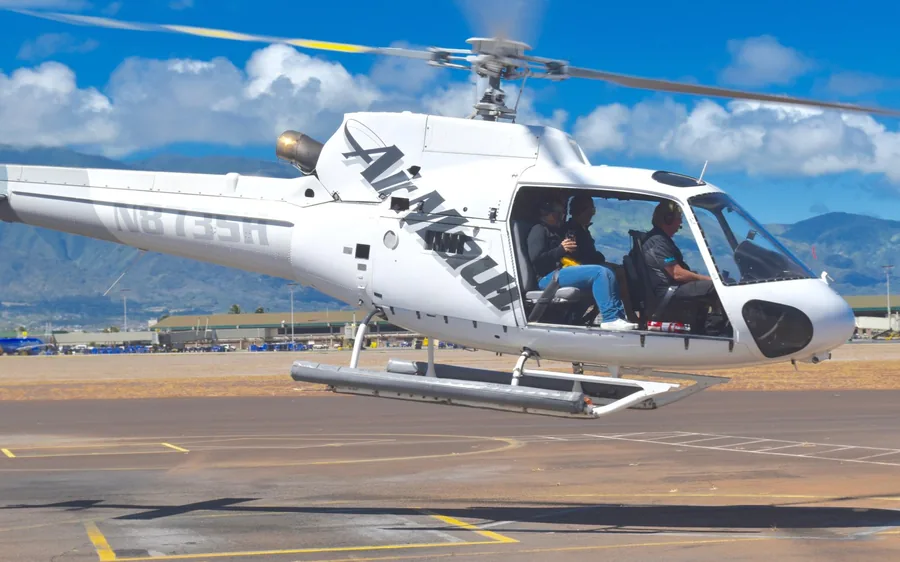
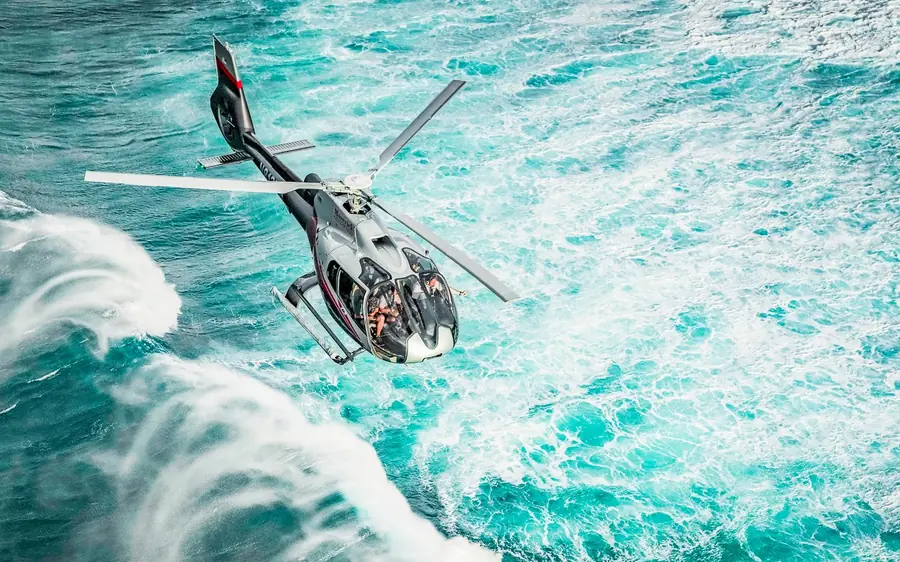
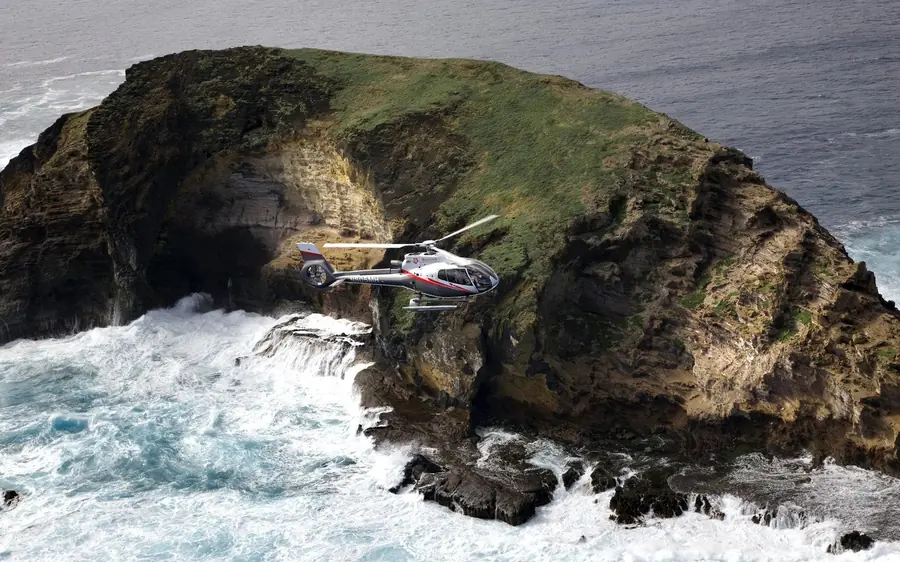
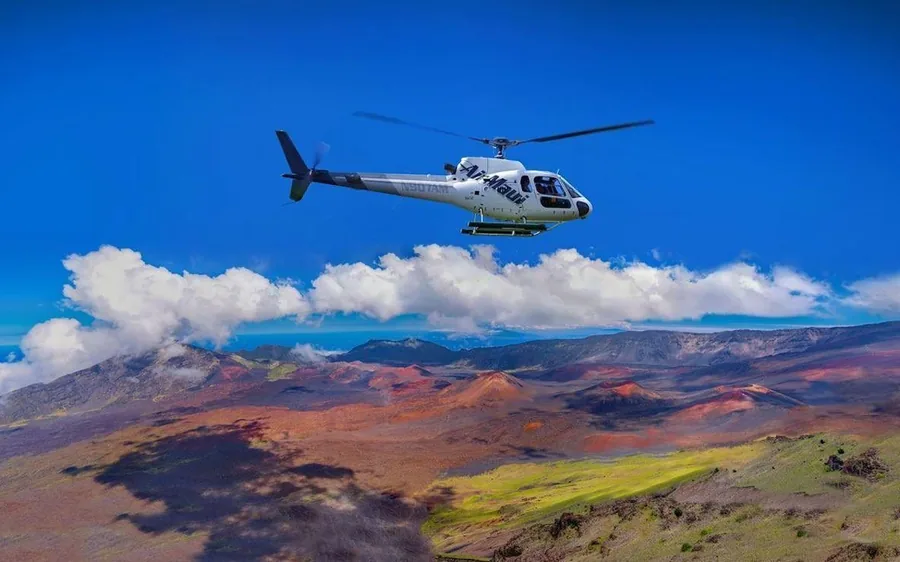
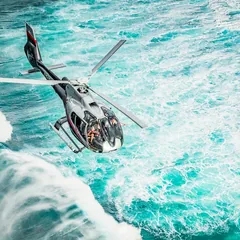
Doors OFF West Maui and Molokai Helicopter Tour
★ 4.8 · 45 reviews
- Doors off, and it changes the photographs
- Forty-five minutes over two islands
- 45 reviews at 4.8
- Age 10+, goggles provided
Photographs
Most disappointing aerial photographs from Maui fail for one of three reasons, and none of them is the camera. The glass, the shutter speed and the seat do almost all the work. Here is what to do about each on a helicopter tour Maui operators fly, and what to accept.

Quick answer
Doors off at $452 changes the photographs more than any camera setting will, because cabin glass adds reflections, flattens contrast and casts green over a green island. If you keep the doors on, shoot at 1/1000 or faster, keep the lens close to the glass without touching it, wear dark clothing, and turn off any image stabilisation that fights the rotor vibration. Seats are assigned by weight on every listing, so ask at check-in rather than counting on a side.
If you keep the doors on
Close to the glass, dark clothes, fast shutter.
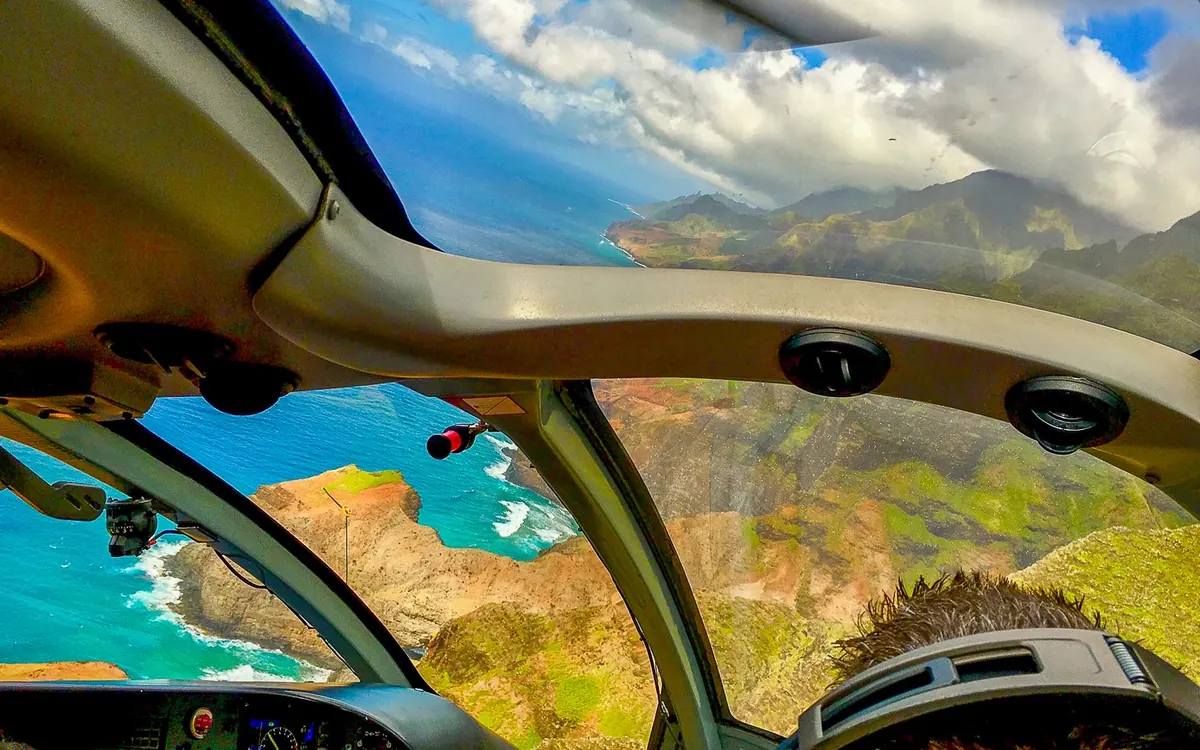
Get close to the glass, do not touch it. Touching transmits rotor vibration straight into the lens. An inch away kills most reflections without the contact.
Wear dark clothes. A white shirt is a light source pointed at the window, and it will appear in every frame over dark water.
Shoot fast. 1/1000 is not about the ground moving; it is about the airframe vibrating. On a bright Maui morning that costs you nothing.
Leave the polariser in the bag. Aircraft glass is curved and often has its own optical stress patterns; a polariser turns those into visible banding.
Turn stabilisation off, or to the mode meant for panning. Some systems hunt against the constant high-frequency vibration of a rotor and soften the frame.
Accept that some frames will have glass in them. Everyone’s do. The keepers from a closed-cabin helicopter tour Maui sells are a smaller proportion of the shoot than from doors off, and that is the trade you made.
Book direct
Doors off first, then the flight that lands, the Molokai crossing and the cheapest circuit.
★ 4.8 · 45 reviews
★ 4.9 · 332 reviews
★ 4.8 · 188 reviews
★ 5 · 21 reviews
The landing flight is the photographic outlier
The only stills on this page taken with both feet on the ground.
Every other listing on this page gives you moving photographs taken through or beside a window. Our top pick at $2,303 gives you thirty minutes standing in the Wailua Valley, which is a completely different kind of photograph: no vibration, no glass, no time limit measured in seconds, and a helicopter in the frame if you want one.
Those thirty minutes are also the only pictures you will bring back that nobody else can take from a road. If the photographs are the reason for the trip, the honest answer is that doors off gives you the better aerials and the landing flight gives you the pictures nobody else has.
Five mistakes that ruin aerial photographs
None of them is about the camera body.
Transmits vibration directly. Hold it an inch clear.
It reflects into the glass and lands on top of the darkest part of the frame.
The airframe is vibrating whatever the light is doing. Go faster.
It magnifies vibration and narrows the field just when the interesting thing is the width of the valley.
Forty-five minutes is short. Shoot the first pass, watch the second.
Common questions
Materially, yes. Cabin glass adds reflections, flattens contrast and casts green.
1/1000 or faster. The vibration matters more than the ground speed.
No. Curved aircraft glass turns a polariser into visible banding.
Not in advance — seats are assigned by weight so the aircraft balances. Ask at check-in.
With a strap. Nothing may be loose in the cabin.
Doors off at $452 for the aerials; the landing flight at $2,303 for photographs nobody can take from a road.
What to photograph, and when
Wide at the start, down in the middle, contrast at the end.
First two minutes: the isthmus. Wide. The two volcanoes with the plain between them is the picture that explains the island, and it is available only at the start.
The climb: texture. Cane land, then upland pasture, then the rim. Shoot down rather than out; the patterns are the subject.
The summit basin: scale. Include the horizon or a cinder cone for reference, otherwise the floor reads as a featureless grey field.
The windward flank: the waterfalls. Fast shutter, wide lens, and accept that half of them will be under cloud. This is the part of a helicopter tour Maui flight where the keeper rate is lowest and the best frames come from.
The coast home: contrast. Black rock against white surf is the easiest strong image of the flight, and the one most people forget to take because they have stopped shooting.
Settings, in one list
You will not have time to think once the aircraft lifts.
Vibration, not ground speed. This is the single most important setting on any helicopter tour Maui flight.
Everything is at infinity; you are buying sharpness, not depth of field.
Let it float to keep the shutter fast.
Tracking a moving landscape through glass confuses face and subject detection.
Some systems hunt against rotor frequency.
The green cast from cabin glass is far easier to remove from a raw file.
Dust on the front element is invisible on the ground and obvious against the bright sky that fills half of every frame from a helicopter tour Maui flight. There is nowhere to do it once the rotors start.
In short
Doors, slot, shutter. In that order.
Doors. The single biggest variable on any helicopter tour Maui flight. Off at $452 means no reflections, no green cast, no flattened contrast.
Slot. The earliest. A low sun gives the valleys shape; a noon helicopter tour Maui flight photographs flat however good the camera is.
Shutter. 1/1000 or faster, because the airframe vibrates constantly on every helicopter tour Maui listing here, doors on or off.
Everything else — lens choice, clothing, filters — is a refinement on those three. Get them right and a phone will do; get them wrong and no body will save the file.
Go deeper
Thirty minutes on ground no road reaches, from $2,303.
CostFrom $396 for forty-five minutes, and what the landing adds.
The verdictTwelve listings, and the four worth your money.
Road or air620 curves and ten hours, against forty minutes of flying.
Doors offWhat changes, and the rules nobody reads until check-in.
BookingWeights, seats, and what sells out on Maui.